Chewable Vitamin D Tablets India

Chewable Vitamin D Tablets India

  • Women Vitamin D, Tablets

    Nutra Healthcare

    Taluka Kamrej, Surat Ground floor First Floor,29-30,Near N H 8 Highway,Soham Industrial Estate,Kamrej, Taluka Kamrej, Surat - 394185, Dist. Surat, Gujarat

    TrustSEAL Verified Verified Exporter

  • D- Valneb 250 Mg Tablet, 1 X 10

    Star Pharma Impex

    Nagpur Shop No 4, Sjti Complex, Residency Road, Sadar, Nagpur - 440001, Dist. Nagpur, Maharashtra

    TrustSEAL Verified Verified Exporter

  • Calcium Cal DK Tablets

    Calcium Cal DK Tablets

    Ask Price

    Form Of Supplement: Tablets

    Type Of Supplement: Calcium

    Packaging Size: 30-180 tablets per bottle

    Grade Standard: Dietary supplement

    Dosage: One tablet once a day

    Is It Vegetarian: Vegetarian

    read more...

    Inconnate Health Care LLP

    Kudasan, Gandhinagar, Dist. Gandhi Nagar B 323-325, Pramukh Arcade Reliance Square, Kudasan, Kudasan, Gandhinagar - 382421, Dist. Gandhi Nagar, Gujarat

    TrustSEAL Verified Verified Exporter

  • Popular Vitamin D Tablets Products

  • Abhiforce -D Tablet, 10 X 10, 50+30

    Abhiforce -D Tablet, 10 X 10, 50+30

    ₹ 200/ strip Get Latest Price

    Form: Tablets

    Packaging Size: 10 X 10

    Packaging Type: Blister

    Brand: Abhiforce-D

    Key Ingredient: Sildenafil (50mg) + Dapoxetine (30mg)

    Usage / Application: Treatment of Premature ejaculation

    read more...

    Lahar Pharmaceuticals

    Ganjipeth, Nagpur Shop No. 339, 3rd Floor, Sandesh Dawa Bazar, Ganjipeth, Nagpur - 440018, Dist. Nagpur, Maharashtra

    TrustSEAL Verified

  • Price Trend for Vitamin D Tablets

    BETA

    These are indicative values based on popular product prices.

    Prices across cities for Vitamin D Tablets

    Is the information useful? YES 👍 NO 👎

  • Calciheel -D Tablets, 10

    Calciheel -D Tablets, 10

    ₹ 60/ Pack Get Latest Price

    Packaging Size: 10

    Composition: Calcium Carbonate And Vitamin D3 Tablet

    Brand: Calciheel D3

    Also gives: Third Party Manufacturing

    Form: Tablet

    Prescription/Non prescription: Non prescription

    read more...

    Silverline Medicare Private Limited.

    Bezonbagh, Nagpur Shop No. 501 & 502, 5th Floor, Panjwani Market Jagnath Road, Tin Nal Square, Jagnath Road, Tin Nal Square, Bezonbagh, Nagpur - 440002, Dist. Nagpur, Maharashtra

    TrustSEAL Verified Verified Exporter

  • Osteomove Coral Calcium Vitamin D Tablets, And 15 Tablets

    Vcare Medicines

    Wadala, Mumbai C-13, 1st floor, Shree Ram Industrial Estate G.D.Ambekar road, Wadala, Mumbai - 400037, Dist. Mumbai, Maharashtra

    TrustSEAL Verified Verified Exporter

  • Tell us what you need, and we'll help you get quotes

  • Calcitriol Calcium Carbonate Zinc Tablet

    Calcitriol Calcium Carbonate Zinc Tablet

    ₹ 450/ Box Get Latest Price

    Country of Origin: Made in India

    Calcitriol + Calcium Carbonate + Zinc + Risedronate is a combination of four medicines: Calcitriol , Calcium Carbonate , Zinc and Risedronate which treat osteoporosis. Calcitriol is a form of vitamin D which helps your

    read more...

    Essence Pharmaceuticals Private Limited

    Ghaziabad Radhey Sham Vihar, Ghaziabad - 201009, Dist. Ghaziabad, Uttar Pradesh

    Verified Supplier Verified Exporter

  • Tablet Ginger Vitamin D Vitamin B6 Lime, Packaging Size: Custmized

    Medwise Overseas Private Limited

    S. G. Highway, Ahmedabad A/202, Mondeal Square, S. G. Highway, Ahmedabad - 380059, Dist. Ahmedabad, Gujarat

    TrustSEAL Verified Verified Exporter

  • Biotrex Vitamin D Tablets, Standard

    Biotrex Nutraceutical

    SG Highway, Ahmedabad No. 1106/1107, Matrix Tower,, SG Highway, Ahmedabad - 380015, Dist. Ahmedabad, Gujarat

    TrustSEAL Verified

  • Nutricore Performance Calcium Vitamin D Tablets, Pack of 60

    Women Capsules Calcium Vitamin D Tablets

    • Watch related videos

    • VITAMIN D3
  • Have a Question? Ask our expert

    Speak your question

    Please enter your question.

  • Vitamin D Tablet

    Vitamin D Tablet

    ₹ 10/ 10 tab Get Latest Price

    Packaging Type: Bottle

    Brand: Customize

    Strength (mg): 400 IU

    Key Ingredient: Vitamin D3

    Form: Chewable

    Country of Origin: Made in India

    read more...

    Nutralike Health Care

    Kuha, Ahmedabad Plot No. A/23, Swagat-3 Industrial Park Indore Ahmedabad Highway, Contact - 98793-31337, Kuha, Ahmedabad - 382433, Dist. Ahmedabad, Gujarat

    TrustSEAL Verified

    Company Video

  • Greecal Calcium with Vitamin D Tablets USP, Packaging Type: Strip

    Green Lab Healthcare

    Mayapuri, New Delhi C -173, 2nd Floor Mayapuri Industrial area, Mayapuri, New Delhi - 110064, Delhi

    TrustSEAL Verified

  • Dollcal Calcium Magnesium Zinc Vitamin D 3 Tablets, for Hospital

    Crewmed Healthcare (Unit Of MM Pharma)

    Mohali ward no 09, Mohali SCO 24, Wadhava Nagar, Near Sunpark Hotel, Dhakoli, Zirkpur, Mohali ward no 09, Mohali - 140604, Dist. Mohali, Punjab

    TrustSEAL Verified

  • Vitamin D3 Tablet, For Commercial, Packaging Type: Box

    Zeon Biotech Private Limited

    Ahmedabad 1ST FLOOR A-102 NEXT TO DIVYA BHASKAR, S G HIGHWAY SAFAL SOLITAIRE CORPORATE PARK, Ahmedabad - 380051, Dist. Ahmedabad, Gujarat

    TrustSEAL Verified

    Company Video

  • Tell us what you need, and we'll help you get quotes

  • Vitamin C & Zinc with Vitamin D3 Chewable Tablets

    Veecube Healthcare Private Limited

    Industrial Area Phase 1, Panchkula Plot No. 151, Industrial Area, Industrial Area Phase 1, Panchkula - 134116, Dist. Panchkula, Haryana

    TrustSEAL Verified

  • Calcium Vitamin D Tablets

    Calcium Vitamin D Tablets

    ₹ 80/ Bottle Get Latest Price

    Form: Tablets

    Packaging Size: 30 Tablets

    Packaging Type: Bottle

    Manufacturer: Pharmaco

    Country of Origin: Made in India

    Treatment: Body absorb calcium

    read more...

    Pharmaco Healthcare

    Kathwada GIDC, Ahmedabad Plot No. 31, Road No. 5/A, Kathwada, GIDC, Kathwada GIDC, Ahmedabad - 382430, Dist. Ahmedabad, Gujarat

    Verified Supplier

  • Vitamin C, Zinc & Vitamin D3 Oxycose C Chewable Tablets

    M S Pharma

    Ambegaon BK, Pune Shop No. 4, Ambegaon BK, Pune - 411046, Dist. Pune, Maharashtra

    Verified Supplier

  • Bioactive Vitamin D in Microtablet Delivery Form, Non prescription

    K.D.Chem Pharma

    Vishala, Ahmedabad Behind Ujala Avenue, Near Vishala Circle, Vishala, Ahmedabad - 380055, Dist. Ahmedabad, Gujarat

    TrustSEAL Verified

  • Garden of Life-Dr. Formulated Probiotics Organic Kids-Berry Cherry-Acidophilus and Probiotic Promote

    Infinite Online Shopping Private Limited

    Lower Parel, Mumbai 1st Floor, 14, 14-A, Lakshmi Industrial Estate, Shankar Rao Naram Path, Lower Parel, Mumbai - 400013, Dist. Mumbai, Maharashtra

    TrustSEAL Verified

  • Vitamin D Supplements, 1-10 Kg

    N.R.chemicals

    Nagar Nigam Colony, Dewas No. 253, Alkapuri, Nagar Nigam Colony, Dewas - 455001, Dist. Dewas, Madhya Pradesh

    TrustSEAL Verified

  • Gasopain D Tablet

    Gasopain D Tablet

    ₹ 1,100/ Box Get Latest Price

    Packaging Type: Alu-Alu

    Packaging Size: 10 x 10 Tablets

    Brand Name: Gasopain D

    Composition: Pantoprazole And Domperidone Gastro Resistant Tablets

    Usage/Application: Hospital, Clinical

    Form: Tablets

    read more...

    Andee Lifesciences

    Manimajra, Chandigarh SCF 235, First Floor, Motor Market, Manimajra, Chandigarh - 160101, Dist. Chandigarh, Chandigarh

    TrustSEAL Verified

    Toldee-d Tablet

  • Nature Made Calcium 500mg With Vitamin D 400iu Tablets 300 Each

    Pricexcuse India

    Hyderabad H. No. 5-3-340, Plot No. 19/a, Laxmi Nagar, Kukatpally, Hyderabad - 500072, Dist. Hyderabad, Telangana

    TrustSEAL Verified

    Company Video

  • Calcium Carbonate, Vitamin D Derivative Vitamin K2-7 & Zinc Sulphate Monohydrate

  • Vitamin C Vitamin D and Zinc Tablets, 10x10 Alu Alu

    Asvins Lifecare

    Panchkula Plot No. 285, Ground Floor, Industrial Area, Phase-1, Panchkula - 134113, Dist. Panchkula, Haryana

    TrustSEAL Verified

  • Vitamin C and zinc chewable tablets, 500 Mg

    SS Nutracare

    Paschim Vihar, New Delhi A5/234, 1st Floor, Paschim Vihar, New Delhi - 110063, Delhi

    TrustSEAL Verified

    Company Video

  • Calcium, Magnesium, Zinc And Vitamin D3 Tablet, Packaging Type: 15 X 2

    Elfin Drugs Private Limited

    Sector 74, Mohali E-206, Phase 8B, Industrial Area S. A. S. Nagar District, Sector 74, Mohali - 160055, Dist. Mohali, Punjab

    TrustSEAL Verified

  • Calciqub-500, Intas Pharmaceuticals Ltd, Prescription

    Cubic Lifesciences Private Limited

    Panchkula District, Panchkula FIRST FLOOR,203,,INDUSTRIAL AREA PHASE II, Phase 2, Panchkula District, Panchkula - 134113, Dist. Panchkula, Haryana

    TrustSEAL Verified

  • Curical -D Tablets, 100mg, 10x10 Blister

    ZOIC HEALTHCARE

    SAS Nagar, Mohali INDUSTRIAL PLOT NO. 195,SECTOR-82,JLPL, MOHALI,, SAS Nagar, Mohali - 160055, Dist. Mohali, Punjab

    TrustSEAL Verified

  • View more Products related to Nutraceuticals & Dietary Supplements

Thank You. We will review and answer your question shortly.

Have a question? Ask our expert

Chewable Vitamin D Tablets India

Source: https://dir.indiamart.com/impcat/vitamin-d-tablets.html

Share:

Can Vitamin D Deficiency Cause Low Libido

Can Vitamin D Deficiency Cause Low Libido

07 Sep Libido lagging? You could be low in this vitamin

If you're a healthy woman with a regular, natural menstrual cycle, your premenopausal years–your 20s, 30s and 40s–are when your sex drive is supposed to be at its peak. That's due to high levels of estrogen and testosterone that circulate during this time, which rev your libido and help you reach orgasm as well as make intercourse comfortable by keeping vaginal tissue spongy and elastic and prompting the production of natural lubrication.

But, what if you're not feeling the urge for sex or intercourse is painful or unsatisfying during this time of your life–and it's not due to a health condition or medication known for impacting sexual function?

A new study in the journal International Urology and Nephrologysuggests you could be low in vitamin D.

In the study, researchers had 50 premenopausal women with female sexual dysfunction (FSD)–the term used to describe sexual problems–not caused by health disorders or medications and 58 premenopausal women without FSD fill out surveys about their sexual function, get evaluated for depression and provide blood samples, which measured levels of estrogen, testosterone, follicle stimulating hormone, prolactin and vitamin D.

What did the researchers find? The two groups of women were generally similar–except for two key differences: The women with FSD had lower levels of vitamin D in their blood and higher symptoms of depression.

When the researchers drilled down, they discovered that low vitamin D itself was linked to low desire, arousal, lubrication, orgasm and satisfaction and more pain. And they found a similar link between these issues and depressive symptoms.

So, what's going on? As the researchers explain it, vitamin D is believed to be involved in the health of sexual organs as well as how the body uses testosterone–a key hormone that drives libido. In addition, this vitamin helps reduce the risk of depression by countering inflammation in the brain thought to contribute to the condition–and that's key since depression is well-known for curbing sexual desire.

If you're struggling with sexual problems, first be aware that you're not alone. FSD impacts roughly 40% to 50% of premenopausal women at some point. Then, talk to your healthcare provider about it. If your FSD isn't due to a hormone disorder, diabetes, thyroid issues, medications or other health conditions, consider asking to have your vitamin D level checked and/or if you can start supplementing with vitamin D3 (the form of vitamin D that's easiest to absorb). If your problem is a shortfall of this vitamin, you could see relief once your level is raised.

  • About
  • Latest Posts

Can Vitamin D Deficiency Cause Low Libido

Source: https://www.myhormonology.com/libido-lagging-you-could-be-low-in-vitamin-d-new-study-shows/

Share:

Can Hair Loss From Vitamin D Deficiency Be Reversed

Can Hair Loss From Vitamin D Deficiency Be Reversed

Nonscarring Alopecia Associated With Vitamin D Deficiency

Cutis. 2018 July;102(1):53-55

Author and Disclosure Information

From the Department of Dermatology, University of Pittsburgh, UPMC North Hills Dermatology, Wexford, Pennsylvania.

The authors report no conflict of interest.

Correspondence: Joseph C. English III, MD, University of Pittsburgh Department of Dermatology, UPMC North Hills Dermatology, 9000 Brooktree Rd, Wexford, PA 15090 ([email protected]).

Vitamin D is well known for its role in bone health and immune regulation, playing a role in cell differentiation, proliferation, and apoptosis. Vitamin D deficiency also has been associated with various forms of nonscarring hair loss. We describe a notable case of nonscarring alopecia associated with only vitamin D deficiency in which vitamin D replacement therapy helped promote hair regrowth. We also discuss diagnosis, prevention, and treatment of vitamin D deficiency.

Practice Points

  • The evaluation of vitamin D levels is important in the management of nonscarring alopecia.
  • Vitamin D deficiency can present as nonscarring alopecia not associated with alopecia areata, androgenetic alopecia, or telogen effluvium.

References

Vitamin D receptors are found in every cell of the body and have been shown to play a role in bone, neural, and cardiovascular health; immune regulation; and possibly cancer prevention via the regulation of cell differentiation, proliferation, and apoptosis.1 Although it is controversial, vitamin D deficiency has been associated with various forms of nonscarring hair loss,2-4 including telogen effluvium, androgenetic alopecia, and alopecia areata. We describe a notable case of nonscarring alopecia associated with vitamin D deficiency in which vitamin D replacement therapy promoted hair regrowth.

Related

Netherton Syndrome in Association With Vitamin D Deficiency

Case Report

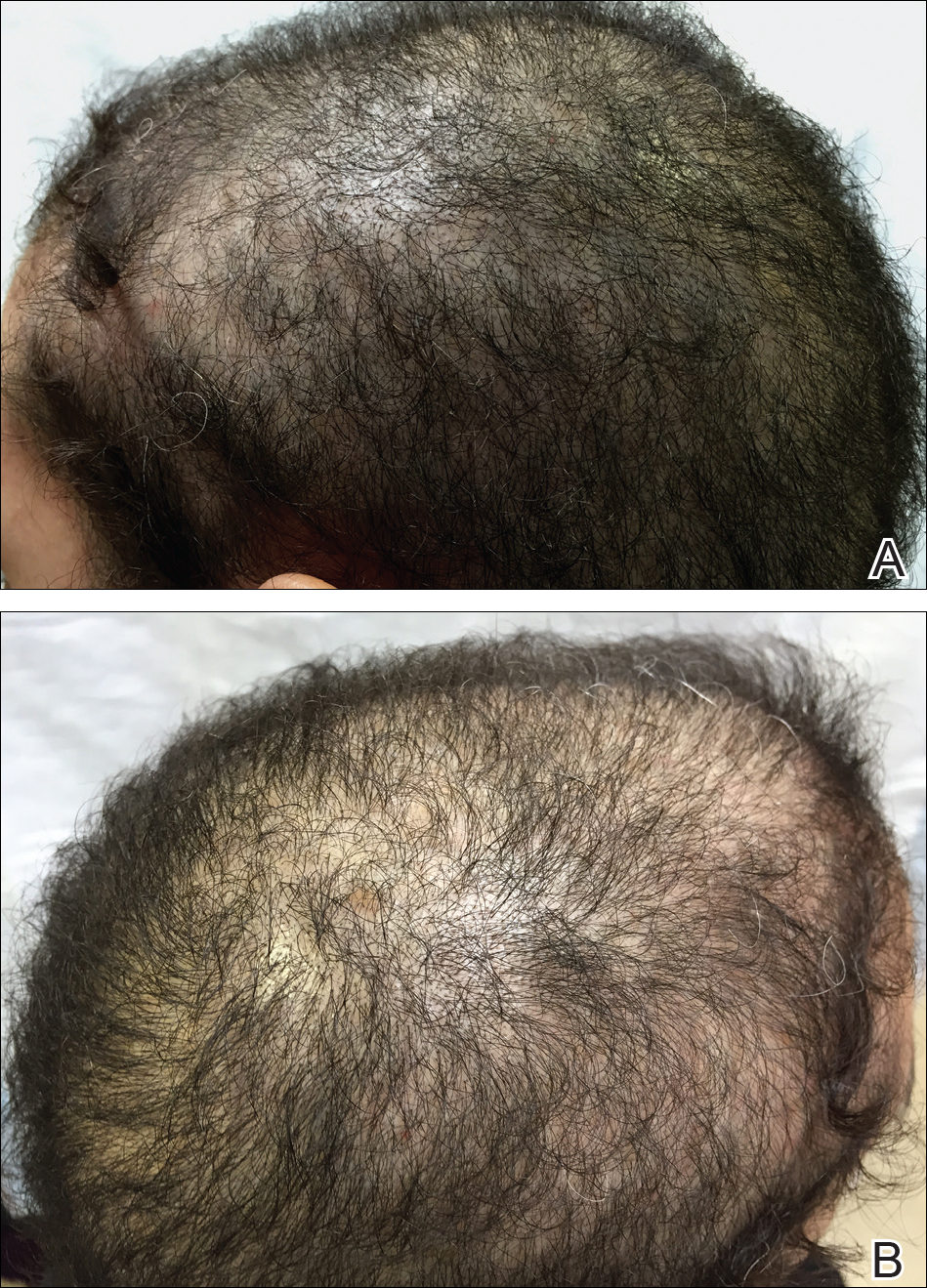
An otherwise healthy 34-year-old black woman presented to the Hair and Nail Clinic at the University of Pittsburgh Medical Center (Pittsburgh, Pennsylvania) for evaluation of progressive hair loss of 4 years' duration that began shortly after her fourth child was born. Although she denied any history of excessive shedding, she stated that she used to have shoulder-length hair and somehow it had become extremely short without shaving or cutting the hair (Figure 1). Her current medications included a progestin intrauterine device and biotin 10 mg once daily, the latter of which she had taken for several months for the hair loss without any improvement.

Figure1

Figure 1. Diffusely thinning, short, brittle hair of 4 years' duration in a vitamin D–deficient woman (A and B).

On physical examination, the patient was noted to have diffusely thinning, short, brittle hair. Trichoscopy was notable for hairs of varying diameters, with some fractured at the level of the follicular ostia but no yellow dots at the follicular openings or exclamation point hairs. No scarring or erythema was seen on the scalp. The patient refused several of our team's recommendations for scalp biopsy due to needle phobia. A hair growth window was made that showed good regrowth at 2 weeks after the initial presentation. Initial blood work revealed a total serum 25-hydroxyvitamin D level of 12 ng/mL (optimal, >30 ng/mL). Complete blood cell count, hormonal panel, zinc level, iron level, and thyroid studies were all normal.

Related

Vitamin D and Skin of Color: A Call to Action [editorial]

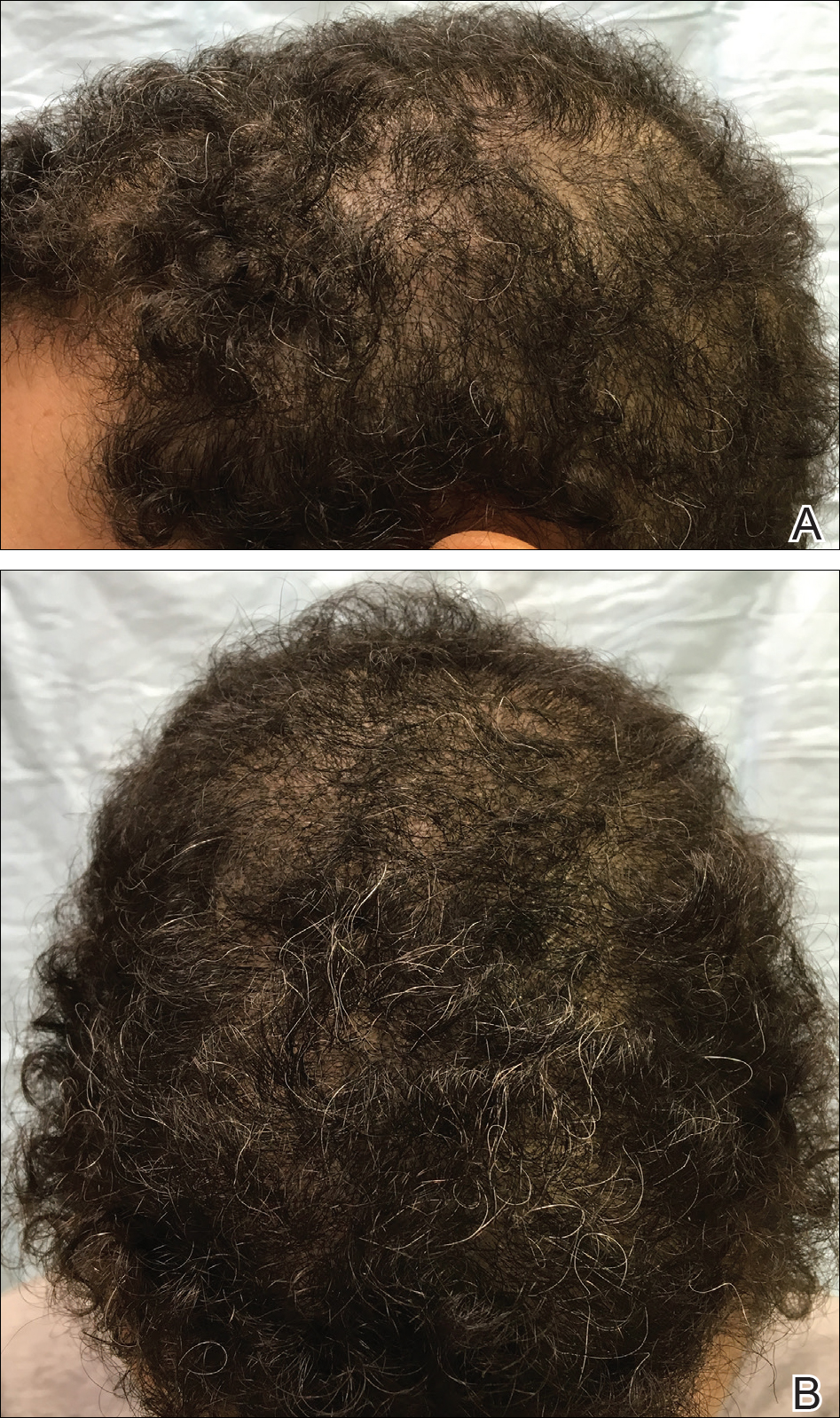
The patient was started on vitamin D3 replacement therapy 50,000 IU once weekly for 4 weeks followed by 1000 IU once daily for 6 months. No other topical or systemic treatments were administered for the nonscarring alopecia. At a follow-up visit 6 months later, the patient's vitamin D level was 36 ng/mL, and she had noticeable hair regrowth (Figure 2). At this time, the diagnosis of nonscarring alopecia associated with vitamin D deficiency was made.

Figure2

Figure 2. At 6-month follow-up, the patient had noticeable hair regrowth following vitamin D supplementation and 1000 IU once daily maintenance (A and B).

Comment

Vitamin D is a fat-soluble vitamin that can be obtained via sun exposure, food sources (eg, fish, vitamin D–fortified foods), and direct supplementation.5 It has been estimated that nearly 1 billion individuals worldwide6 and approximately 41.6% of US adults are vitamin D deficient.7 Certainly not all of these individuals will present with alopecia, but in patients with hair loss, we suggest that vitamin D deficiency is an important factor to consider. Risk factors for vitamin D deficiency include older age, obesity, darker skin types, residence in northern latitudes, and malabsorption syndromes.7

Pathogenesis
Vitamin D is thought to play a role in the normal initiation and completion of the hair cycle as well as the differentiation of the follicular and interfollicular epidermis. The vitamin D receptor (VDR) is thought to induce the development of mature anagen hairs via the canonical WNT-β-catenin and hedgehog signaling pathways.8 In the absence of VDRs, the stem cells in the bulge of the hair follicle have an impaired ability to replicate, and as a result, VDR-deficient mice have shown near-total hair loss.9-12 We propose that vitamin D deficiency can not only be a trigger for hair loss but also can perpetuate hair loss and poor regrowth.

Diagnosis and Prevention of Vitamin D Deficiency
In the skin, 7-dehydrocholesterol is converted to previtamin D3 via UVB light, followed by subsequent conversion to vitamin D3. Dietary sources are in the form of either vitamin D2 or D3, both of which are converted in the liver to 25-hydroxyvitamin D, the major circulating metabolite. In the kidneys, 25-hydroxyvitamin D is then converted to 1,25-dihydroxyvitamin D, the biologically active form. Paradoxically, serum levels of 1,25-dihydroxyvitamin D can be normal or high in the setting of vitamin D deficiency; therefore, serum total 25-hydroxyvitamin D is the best way to assess a patient's vitamin D status.5,13

The optimal serum 25-hydroxyvitamin D level is controversial. Recommendations range between 20 to 40 ng/mL14 and 30 to 50 ng/mL.13,15,16 Vitamin D levels higher than 50 ng/mL have been correlated with an increased risk of bone fractures and certain cancers.16-18 Vitamin D toxicity usually is noted in serum levels greater than 88 ng/mL; symptoms of toxicity include hypercalcemia, nausea, vomiting, and muscle weakness. For nondeficient patients, the National Academy of Medicine (formerly the Institute of Medicine) recommended an upper limit of 4000 IU daily.14 The optimal dose in preventing vitamin D deficiency ranges from 600 to 1000 IU daily.13-15

Treatment of Vitamin D Deficiency
In the setting of vitamin D deficiency, the amount required for repletion often is dependent on each individual's ability to absorb and convert to 25-hydroxyvitamin D. Typically every 100 IU of vitamin D correlates with a 0.7 to 1.0 ng/mL increase in serum 25-hydroxyvitamin D levels.19 There are multiple dosing regimens used to achieve the desired serum 25-hydroxyvitamin D levels in deficient patients. One recommendation from the Endocrine Society is 50,000 IU once weekly for 6 to 8 weeks (single doses >50,000 IU typically are not recommended due to increased risk for toxicity), followed by 600 to 1000 IU once daily in children and 1500 to 2000 IU once daily in adults thereafter.13 In patients with vitamin D deficiency, reassessment of serum 25-hydroxyvitamin D levels is recommended after 3 to 4 months of treatment, and adjustments to the repletion regimen should be made as needed.15,16 Generally, vitamin D3 is recommended over vitamin D2 due to enhanced efficacy in raising serum 25-hydroxyvitamin D levels.20

Vitamin D Deficiency in Alopecia
Although most recommendations are given in the interest of optimizing bone health, in the setting of alopecia, we set a similar serum 25-hydroxyvitamin D goal of greater than 30 ng/mL. We recommend treatment with vitamin D3 and practice the following repletion protocol: 50,000 IU once weekly for 4 weeks, followed by 1000 IU once daily for at least 8 weeks for serum 25-hydroxyvitamin D levels less than 20 ng/mL. For serum hydroxyvitamin D levels between 20 and 29 ng/mL, we recommend 1000 IU once daily for at least 12 weeks. We recheck blood levels again in 3 months. If levels fail to normalize, we will refer the patient to endocrinology. If levels return to normal, we transition to a daily multivitamin with vitamin D (400–800 IU) once daily and refer the patient back to the primary care physician for long-term monitoring.

Next Article:

  • Hair & Nails

Can Hair Loss From Vitamin D Deficiency Be Reversed

Source: https://www.mdedge.com/dermatology/article/169821/hair-nails/nonscarring-alopecia-associated-vitamin-d-deficiency

Share:

Best Vitamin D Supplement For Skin

Best Vitamin D Supplement For Skin

Photo Courtesy: Michael Godek/Getty Images

Are you getting enough sun? In many parts of the world, that might prove difficult during the winter months — and it can impact more than your sunny disposition.When exposed to sunshine, our bodies produce vitamin D, something our bodies need to maintain healthy bones and teeth; support our immune and cardiovascular systems; and stave off certain diseases, like type 1 diabetes. Some reports suggest that roughly three-quarters of American teens and adults might not be getting enough vitamin D. So, how can you turn that number around?

The National Institutes of Health (NIH) makes recommendations for what one's daily intake of vitamin D should be based on age, gender and other factors. The recommendations, in micrograms (mcg), can be summarized as follows:

Photo Courtesy: Sean Gladwell/Getty Images
  • Infants (up to 12 months): 10 mcg daily
  • Children (1 to 13 years): 15 mcg daily
  • Teens (14 to 18 years): 15 mcg daily
  • Adults (19 to 50 years): 15 mcg daily
  • Older adults (51 to 70 years): 15 mcg daily
  • Seniors (70+ years): 20 mcg daily

So, how can you supplement your vitamin D intake if all that basking in the sun isn't cutting it? Thanks to the Dietary Guidelines for Americans, we've rounded up 10 healthy foods that can help you reach those daily vitamin D goals.

Salmon

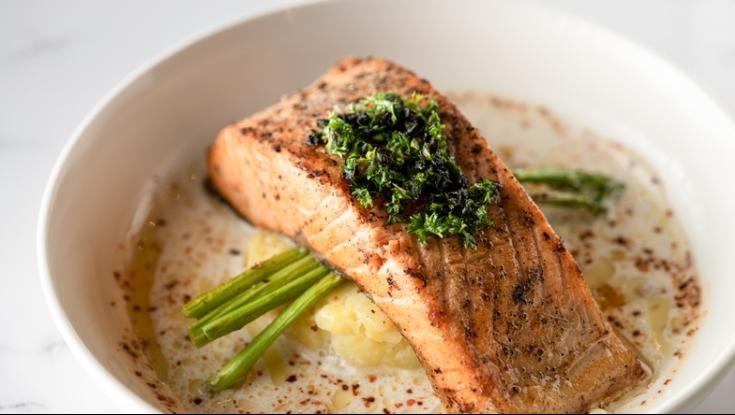
Salmon comes in quite a few different varieties — canned sockeye salmon, smoked chinook salmon, canned pink salmon, cooked sockeye salmon, cooked pink salmon and even cooked wild coho salmon — and all of them are chock-full of vitamin D. All of these options will help you hit your goals. After all, a three-ounce serving of canned sockeye salmon contains 17.9 mcg of vitamin D, while a three-ounce portion of cooked sockeye salmon contains 11.1 mcg of vitamin D.

Photo Courtesy: Justin Ong/Getty Images

Smoked Whitefish

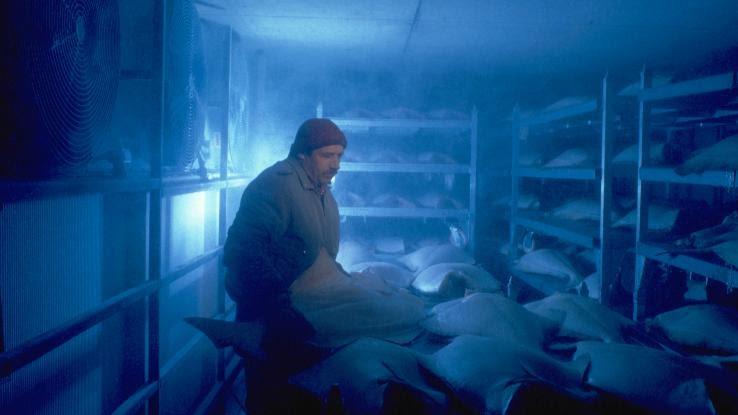
Want to change up that salmon intake? Whitefish can help with that. While whitefish are a species of fish, the term also refers to a cluster of types of fish, all of which have a mild, slightly sweet flavor. Some of the most popular "whitefish" include pollock, bass, cod, halibut, grouper and haddock. On average, a standard three-ounce serving of smoked whitefish contains an impressive 10.8 mcg of vitamin D.

Photo Courtesy: Bohemian Nomad Picturemakers/Getty Images

Swordfish

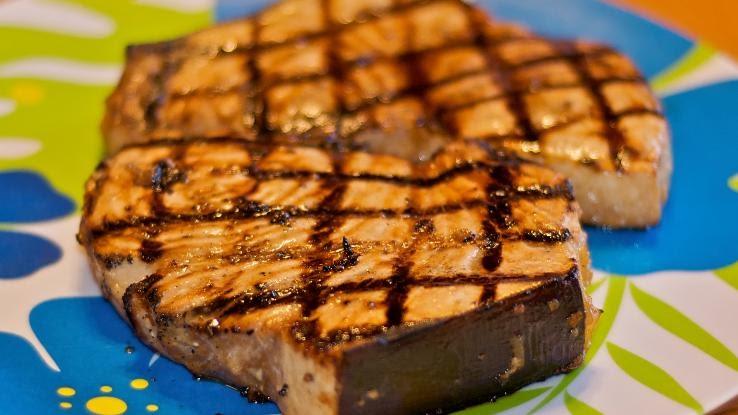
If you're looking for a terrific source of vitamin D, and to break up all that whitefish and salmon, try swordfish. These creatures can grow to be a whopping 1,400 pounds — and nearly 15-feet in length. While you wouldn't want to tangle with one of these in the ocean, encountering it as a nice, grilled steak is a treat. Best of all, a three-ounce portion will provide you with 14.1 mcg of vitamin D.

Photo Courtesy: Shawn Miller/Getty Images

Tilapia

Tilapia is a cluster of fish species that aren't found in nature. That is, tilapia is a farmed fish, which makes it pretty inexpensive. This mild species is the fourth most common type of seafood eaten by Americans, in part because of its versatility. We recommend a nice herb-and-parmesan crust, but, any way you slice it (or season it), a three-ounce portion will provide you with 3.1 mcg of vitamin D.

Photo Courtesy: Mike Kemp/Getty Images

Canned Tuna

Not into canned food? Well, canned fish should probably be your exception. In fact, canned tuna, in addition to being readily available and inexpensive, can make an abundance of tasty meals, from tuna salad and melts to casseroles. Best of all, a three-ounce serving of light tuna canned in oil contains about 5.7 mcg of vitamin D.

Photo Courtesy: LauriPatterson/Getty Images

Mushrooms

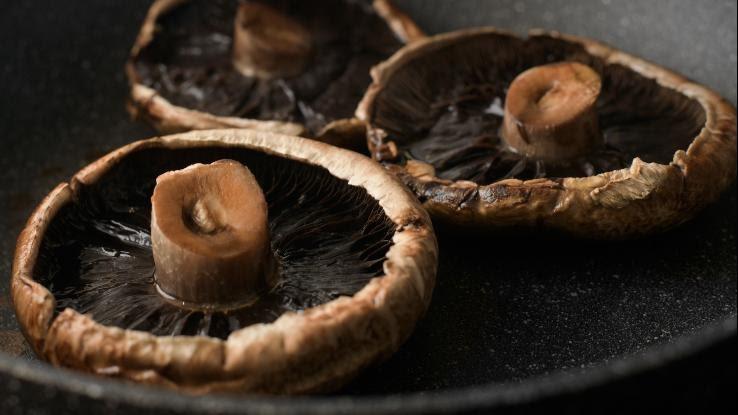
The five fish options we've listed above might not have surprised you, but this one might. Many varieties of mushrooms — including portabella, cremini, morels, chanterelles, maitake, and even your basic white button mushrooms — are excellent sources of vitamin D. In fact, half a cup of grilled portabella mushrooms delivers an impressive 7.9 mcg of vitamin D.

Photo Courtesy: Robert Lowdon/Getty Images

Eggs

Eggs — and, in particular, egg yolks — are one of the easiest, cheapest and quickest ways to nab some vitamin D. However, they may not be the food of choice for folks with high cholesterol. If your diet allows, whip up two scrambled eggs and enjoy getting 5% of your recommended daily intake of vitamin D first thing in the morning.

Photo Courtesy: valentinrussanov/Getty Images

Milk

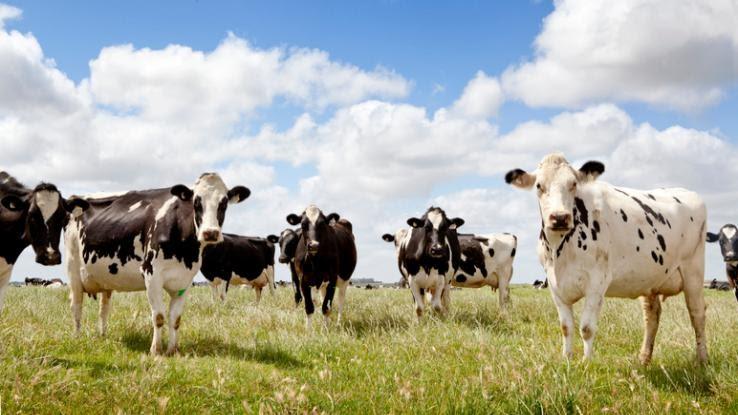
Milk is more than just a great source of calcium. In fact, vitamin D is among its significant nutritional benefits. When it comes to a 16-ounce serving of cow's milk, the vitamin D content varies based on the milk's composition. For example, whole milk contains 6.3 mcg of vitamin D, while 2%, 1% and skim milk all contain 5.9 mcg. Even soy and dehydrated (powdered) milk will help you reach your goals by providing 5.8 mcg and 3.4 mcg of vitamin D respectively.

Photo Courtesy: JW LTD/Getty Images

Yogurt

Milk is not the only dairy product capable of delivering some serious vitamin D benefits. Of course, the nutritional value of yogurt changes depending upon the variety. For example, Greek-style yogurt contains more protein and less sugar than other types of yogurt. Nonetheless, you can still expect anywhere from 2 to 3 mcg of vitamin D per eight-ounce serving, regardless of the variety of yogurt.

Photo Courtesy: Westend61/Getty Images

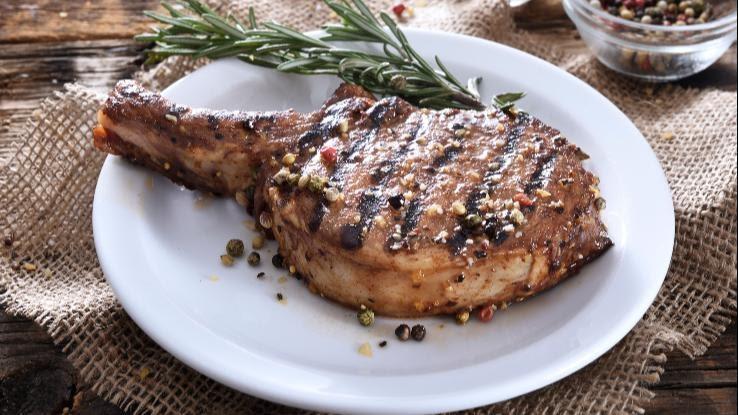
Pork

So far, you've seen lots of fish and dairy options. You might be wondering, Where's the meat? Well, generally speaking, beef and chicken are not great sources of vitamin D. In fact, if you're a meat lover in search of some vitamin D, pork is your best bet. The nutritional value of pork varies depending upon the cut, method of preparation and more, but you're likely to find between 0.2 to 2.2 mcg of vitamin D in a standard three-ounce serving of pork.

Photo Courtesy: EasyBuy4u/Getty Images

Resource Links:

  • The U.S. Department of Health and Human Services and Department of Agriculture's Dietary Guidelines for Americans
  • The National Institutes of Health (NIH)

MORE FROM SYMPTOMFIND.COM

Best Vitamin D Supplement For Skin

Source: https://www.symptomfind.com/health/vitamind-foods?utm_content=params%3Ao%3D740013%26ad%3DdirN%26qo%3DserpIndex

Share:

Alimentos Ricos Em Calcio E Vitamina D

Alimentos Ricos Em Calcio E Vitamina D

queijos, sardinhas, leite, couve e brócolos

15 alimentos ricos em cálcio para fortalecer a saúde dos seus ossos

• 6 mins. leitura

O cálcio é um mineral fundamental para o funcionamento do nosso organismo. Cerca de 99% encontra-se armazenado nos ossos e dentes, mas também pode ser encontrado nas células – sobretudo nas musculares – e no sangue.

Desempenha um papel essencial na:

  • Formação dos ossos e dentes;
  • Contração muscular;
  • Funcionamento normal das enzimas (proteínas globulares especializadas que controlam e regulam a velocidade e as ações químicas do organismo);
  • Coagulação do sangue;
  • Ritmo cardíaco normal.

Sempre que os níveis de cálcio no sangue estão baixos, o organismo vai buscar o cálcio em excesso nos ossos para compensar essa carência. Quando uma pessoa não consome uma quantidade suficiente de cálcio, esta movimentação de cálcio dos ossos para o sangue provoca o enfraquecimento da estrutura óssea. A consequência pode ser, por exemplo, o desenvolvimento de osteoporose.

O controlo da quantidade de cálcio existente nas células e no sangue é feito pelo nosso corpo, através da ação de duas hormonas: a hormona paratiroideia e a calcitonina.

A primeira é produzida pelas glândulas paratiroides e, além de estimular os ossos a libertarem cálcio para o sangue, faz também com que os rins dispensem uma quantidade menor de cálcio na urina e, ao mesmo tempo, ativem vitamina D, que contribui para uma maior absorção daquele mineral pelo trato digestivo. A calcitonina, por seu turno, é produzida pelas células da tiróide. A sua ação reduz os níveis de cálcio no sangue ao diminuir, ligeiramente, a velocidade de decomposição dos ossos.


A importância do cálcio

O cálcio é fundamental em todos os períodos da vida, independentemente, da idade. Contudo, as necessidades variam, ajustando-se ao período de crescimento do organismo, daí que seja na infância, onde precisamos de maior quantidade de cálcio.

Para manter um nível suficiente de cálcio no sangue sem que haja enfraquecimento dos ossos, um adulto precisa de consumir pelo menos 1000 a 1500 gramas de cálcio por dia.

Isto porque, este mineral necessita de ser obtido através dos alimentos, uma vez que não é produzido pelo corpo. O baixo consumo de cálcio está associado a diversas doenças, nomeadamente:

  • Osteoporose;
  • Hipertensão arterial;
  • Obesidade.

Embora os produtos lácteos sejam os principais fornecedores deste mineral, há outros alimentos que também o contêm.

O cálcio presente no leite e seus derivados é, porém, mais facilmente absorvido pelo organismo, ou seja, possui uma elevada biodisponibilidade quando comparado com o que está presente noutros alimentos.

Embora o cálcio seja fundamental para o funcionamento do organismo, é importante ter presente que o excesso de consumo pode, também, dar origem a problemas, designadamente, dores de estômago e diarreia.


Uma dieta rica em cálcio

Queijo

O queijo é, de uma maneira geral, uma excelente fonte de cálcio, com destaque para o parmesão (1300 miligramas por 100 gramas) e o queijo emmental (1080 miligramas por 100 gramas).

Além disso, muitos tipos de queijo são ricos em proteína e baixos em lactose, o que é importante para as pessoas com intolerância (também existem os queijos sem lactose). Convém, porém, ter em atenção que alguns queijos podem ser muito calóricos, devendo o seu consumo ser evitado, como é o caso do queijo cheddar.


Queijo fresco de ovelha

O queijo fresco é outra excelente fonte de cálcio (580 miligramas por 100 gramas). Os intolerantes à lactose podem escolher o queijo fresco sem lactose, também disponível no mercado.


Iogurte

Tal como a generalidade dos produtos lácteos, o iogurte é uma boa fonte de cálcio. Uma taça de iogurte natural contém cerca de 30% da dose diária recomendada de cálcio para um adulto.


Leite de vaca

O leite de vaca é uma das principais fontes de cálcio e também das mais baratas. Cada 100 mililitros de leite de vaca UHT (com ou sem lactose) fornece 110 miligramas deste mineral.

Além disso, o cálcio obtido através do leite é de excelente absorção pelo organismo. No caso do leite de vaca em pó magro, o valor sobe para 1270 miligramas de cálcio por cada 100 gramas.


Sardinha em conserva

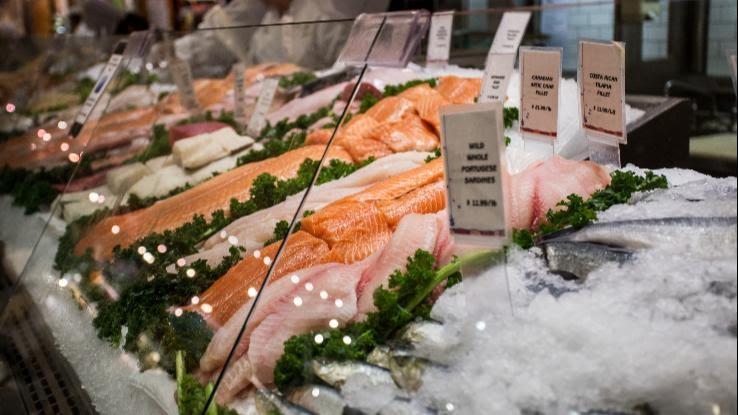
De uma maneira geral, aqueles peixes em que é possível comer as espinhas são boas fontes de cálcio. A sardinha é, sem dúvida, o peixe mais popular na nossa dieta. Sobretudo, a sardinha meio gorda em conserva e azeite, que fornece 450 miligramas de cálcio por cada 100 gramas.


Vegetais de folhas escuras

De uma maneira geral, os vegetais de folhas escuras são boas fontes de cálcio. Entre eles, destaca-se os espinafres, couves, nabos e couve-lombarda.


Cereais fortificados

Os alimentos fortificados (aos quais é adicionado cálcio) são, também, uma forma de obter este mineral. Mesmo antes de lhes adicionarem leite, alguns cereais podem fornecer mais de 1000 miligramas de cálcio, satisfazendo a totalidade das necessidades diárias de um adulto. O destaque vai, sobretudo, para a aveia.


Soja

A farinha de soja com baixo teor de gordura é uma boa fonte. Por cada 100 gramas, obtemos 250 miligramas de cálcio. As bebidas de soja são, igualmente, opções razoáveis, embora nem todas. Convém, por isso, verificar os respetivos rótulos.


Amêndoa

No grupo dos frutos secos, a amêndoa é a principal fonte de cálcio. Cada 100 gramas de amêndoas fornecem 270 miligramas deste mineral.


Feijão e lentilhas

O feijão e as lentilhas são alimentos ricos em fibras, proteínas e micronutrientes. Algumas variedades são, também, boas fontes de cálcio. O feijão branco cozido (demolhado) é uma boa opção, fornecendo 50 miligramas de cálcio por cada 100 gramas.


Brócolos

Os brócolos estão entre os vegetais mais ricos em cálcio. Cada 100 gramas de brócolos cozidos contêm 56 miligramas. Esse valor sobe para os 67 miligramas no caso de serem consumidos crus.


Salsa seca

A salsa seca é uma excelente fonte de cálcio. Por cada 100 gramas de salsa seca obtemos mais de 1000 miligramas deste mineral. Isto equivale à totalidade das necessidades diárias de um adulto.


Tofu

O tofu é um alimento com uma elevada percentagem de cálcio. Habitualmente, pode oferecer entre 10 a 40% da dose diária recomendada para um adulto.


Quiabo

O quiabo é um vegetal de origem africana que também é possível encontrar em Portugal, muito rico em vitaminas, antioxidantes e minerais, nomeadamente, cálcio. Cada 100 gramas de quiabo cru possui 160 miligramas de cálcio.


Amêijoa

Cem gramas de amêijoas abertas ao natural, sem sal, fornecem 100 miligramas de cálcio. Este marisco é, por isso, uma boa fonte, além de ser, também, muito rico em proteína e baixo em calorias.


Tabela de alimentos ricos em cálcio por 100 gramas de alimento


Alimentos ricos em cálcio Cálcio por 100g
Queijo parmesão 1300mg
Queijo gruyère 950mg
Queijo flamengo (30% de gordura) 850mg
Queijo fresco de ovelha 580mg
Iogurte meio gordo natural açucarado 160mg por 100ml
Iogurte magro natural açucarado 160mg por 100ml
Iogurte magro aromatizado açucarado 150mg por 100ml
Iogurte magro natural 120mg por 100ml
Leite de vaca UHT magro 110mg por 100 ml
Leite de vaca em pó magro 1150mg
Sardinha meio gorda de conserva em azeite 450mg
Espinafres crus 100mg
Quiche de espinafres 270mg
Flocos de aveia 40mg
Bolacha de aveia 54mg
Soja, grão seco, cru 250mg
Soja (farinha com baixo teor de gordura) 260mg
Bebida de soja com açúcar, cálcio, sal e aromas 120mg
Amêndoa (miolo com pele ou miolo, torrada, sem pele) 270mg
Feijão alado 30mg
Feijão branco cozido 65mg
Feijão manteiga cozido (demolhado) 50mg
Brócolos cozidos 56mg
Brócolos crus 67mg
Salsa seca 1080mg
Salsa fresca 200mg
Tofu (frito com azeite, frito com óleo de milho ou simples) 130mg
Quiabo cru 160mg
Amêijoa aberta ao natural sem sal 100mg
Amêijoa à Bulhão Pato 63mg
Amêijoa crua 51mg
Fonte: Tabela da Composição de Alimentos – Instituto Nacional de Saúde Doutor Ricardo Jorge

Aviso: O Blog Mais Saúde é um espaço meramente informativo. A Medicare recomenda sempre a consulta de um profissional de saúde para diagnóstico ou tratamento, não devendo nunca este Blog ser considerado substituto de diagnóstico médico. Encontre aqui profissionais de saúde perto de si.

Contribua com sugestões de melhoria através do nosso formulário online.

Partilhe este artigo:

Obrigado pela sua preferência.

Irá receber no seu email as melhores dicas de Saúde e Bem-estar.
Pode em qualquer momento alterar ou retirar o(s) consentimento(s) prestado(s).

Receba as melhores dicas
de Saúde e Bem-estar

Precisamos do seu consentimento para envio de mais informação.

Artigos relacionados:
  • alimentos numa mesa: camarão, iogurtes

  • prato de bróculos

Ver mais

Alimentos Ricos Em Calcio E Vitamina D

Source: https://www.medicare.pt/mais-saude/dieta-e-nutricao/alimentos-ricos-em-calcio

Share:
banner